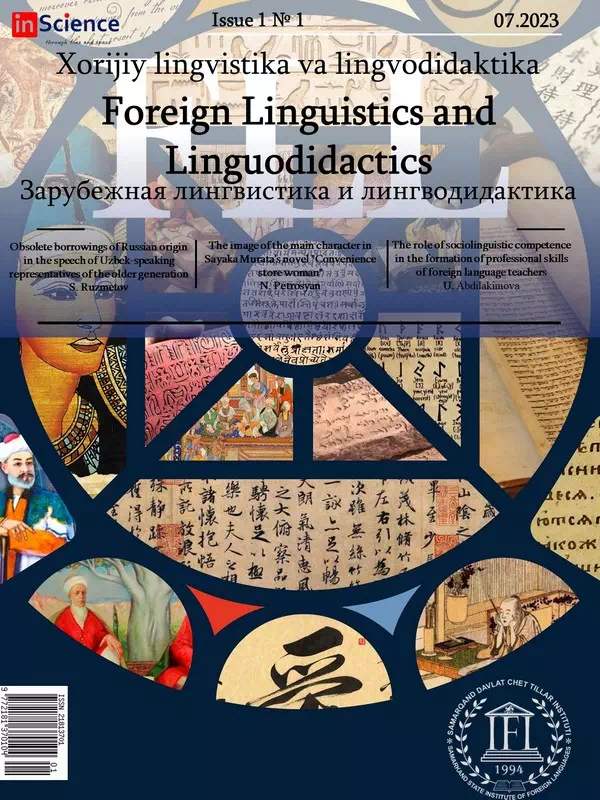
No. 6/S (2025) Special issue of “Foreign Linguistics and Linguodidactics” journal
Published:
14-08-2025
To share

inLibrary — is a scientific electronic library built on the paradigm of open science (Open Science), the main tasks of which are the popularization of science and scientific activities, public quality control of scientific publications, the development of interdisciplinary research, a modern institute of scientific review, increasing the citation of Uzbek science and building a knowledge infrastructure.
CONTACTS:
Republic of Uzbekistan, Tashkent, Parkent street 51, floor 2


