➤
Categories
Journals
Conferences
Catalog of abstracts
Catalog of dissertations
Catalog of monographs
Catalog of textbooks
Upcoming conferences
Organizations
Authors
Blog
About
Submissions
Public Offer
Personal data processing policy
Open Access Statement
Public license
Copyright
Contact
Login
Home
/
Archives
/
No. 1 (2025)
No. 1 (2025)
Journal:
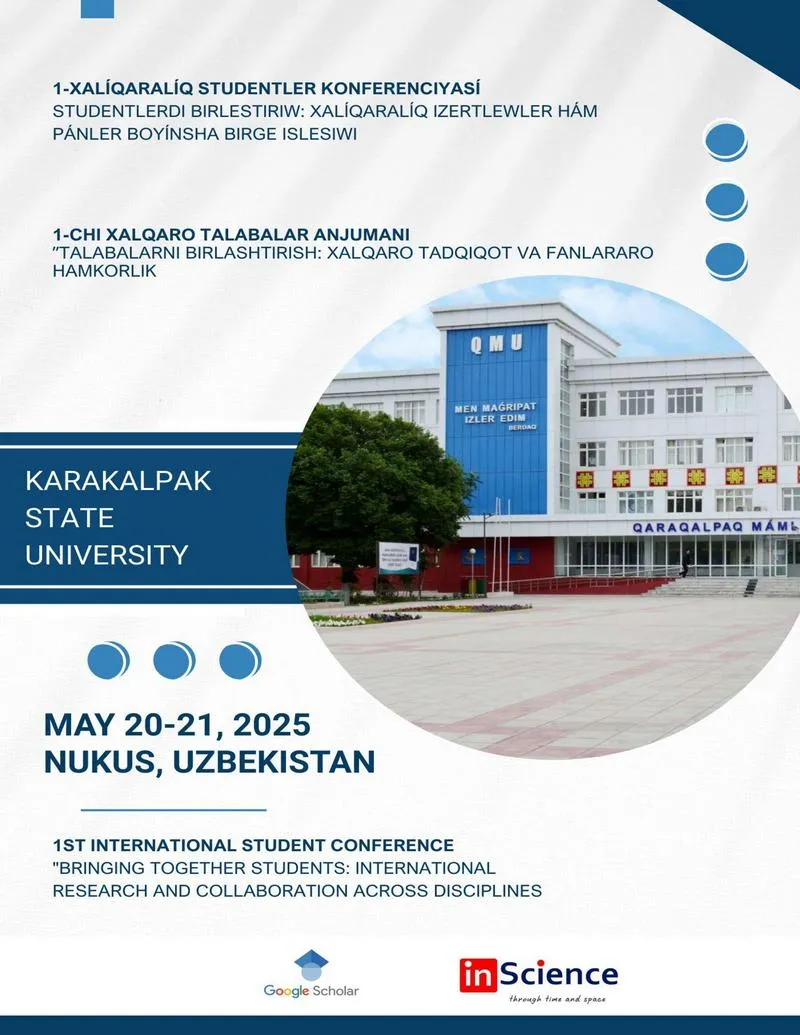
Bringing together students: international research and collaboration across disciplines
Published:
28-05-2025
To share
Articles
The role of dictionaries and language learning
This article discusses the role that dictionaries play in language learning, with their importance in promoting lexical competence and learner independence at the forefront. Bilingual dictionaries and monolingual dictionaries are contrasted, challenges in dictionary usage highlighted, and the necessity for school dictionaries suited to learner age. The research supports dictionary training in classrooms to enhance learners' abilities and optimize gains in dictionary usage promoting language acquisition.
Hurliman Mambetniyazova, Umida Khodjaniyazova
367-370
16
6
Read
The impact of artificil intelligence (chatgpt) tools on english language learning among university students
This article delves into the dynamic field of integrating Artificial Intelligence (Al) into English Language Teaching (ELT), a burgeoning area of research with profound implications for educators and learners alike. It aims to unfold the complex interplay between innovative Al tools and traditional teaching methodologies, examining how the former can enhance language learning outcomes and personalize education. The article also tackles the issue of cultural and linguistic inclusivity, stressing the need for Al tools to represent and accommodate the diverse linguistic landscape of global learners. Furthermore, it discusses the delicate balance between leveraging technology and retaining the essential human elements of teaching, suggesting ways to integrate Al tools without diminishing the role of traditional, interactive pedagogies. The article concludes by emphasizing the need for ongoing research and development to address the unresolved challenges and harness the full potential of Al in ELT. Through a comprehensive analysis and synthesis of current research, the article provides valuable insights for educators and developers looking to navigate the promising yet complex terrain of Al in language education.
Kamola Mambetova
370-372
19
7
Read
Oliy ta`lim va ularning tuzilmasi
Ushbu maqolada mamlakatimiz oliy ta’lim tizimining umumiy tuzilmasi, uning tarkibiy qismlari, turli ta’lim darajalari, ta’lim turlari va boshqaruv mexanizmlari batafsil o'rganiladi. Shuningdek, turli mamlakatlardagi oliy ta’lim tizimlarining o'xshashliklari va farqlarini solishtirish va zamonaviy sharoitda oliy ta'limning rivojlanish tendentsiyalarini tahlil qilishga harakat qilinadi.
Madina Mirzaakhmedova
372-374
13
2
Read
Effective methods and techniques for teaching foreign languages
This article talks about foreign language teaching methods in educational institutions, foreign language teaching methodology, types of modern methods used in this methodology and their use. It also mentions the psychological basis of foreign language teaching methodology and interactive ways used in learning English and in higher education institutions.
Gulasal Mirzayeva, Sabrina Mahkamova
374-378
16
4
Read
Tа’limdа jаrаyonidа inklyuziv kompetentlikni rivojlаntirish
Ushbu maqolada ta’lim jarayonida inklyuziya masalalari tahlil qilinadi. Inklyuziv ta’limning mohiyati, uning ahamiyati va ta’lim tizimidagi roli yoritiladi. Shuningdek, inklyuziv ta’limni amalga oshirishda uchraydigan muammolar va ularni hal etish yo'llari tahlil qilinadi. Tadqiqotda xorijiy tajriba va milliy ta’lim tizimida inklyuziya tamoyillarining qo'llanilishi bo’yicha takliflar keltirilgan.
Nilufar Mirzaeva
378-380
10
4
Read
Effective methods in teaching foreign languages
Learning a language is like pouring water into a bottomless well; the deeper you go, the more you can learn. Numerous successful language-learning strategies have been investigated and examined by researchers throughout the years. The most useful approaches are discussed in this article along with their benefits, drawbacks, and interrelations. We came across a great deal of books, papers, websites, and scholarly viewpoints while conducting our investigation. We discovered that success is unavoidable when someone decides to learn and works hard for it. We hope that this article will be helpful to both you and us.
Sitora Mullayeva, Nodira Normatova
380-381
8
4
Read
The usage of instagram and tiktok for learning english
Social media is reshaping how people learn, especially languages. Instagram and TikTok, in particular, have become part of students’ daily routines. Therefore, this article explores innovative ways students in Uzbekistan use these platforms to learn English. It discusses platform-specific techniques, peer learning, cultural exposure, and teacher involvement while considering time management and creativity as key factors.
Nazira Naimova, Shaxsanem Nietullaeva
381-383
17
5
Read
Using instagram and tiktok as tools for learning english: perception of students in uzbekistan
Social media platforms such as Instagram and TikTok have become increasingly integrated into the everyday lives of students. Consequently, their potential for educational use— particularly for language learning—has gained growing interest among scholars. This article explores how students in Uzbekistan perceive these platforms as tools for learning English. Drawing on existing academic research, the study discusses benefits, challenges, and pedagogical implications, while emphasizing the importance of guided and strategic use of digital media in education.
Nazira Naimova, Aruxan Omirbaeva
383-384
7
2
Read
Tricks of pedagogy
This text was written in the hope that it might offer assistance to at least one reader. Here, I discuss life hacks designed to simplify and enhance our experience in the realm of education. Pedagogy, the art and science of teaching, involves much more than the simple transmission of knowledge. It is an intricate blend of theory, practice, and human interaction. In the ever-evolving landscape of education, successful teachers do not merely instruct—they inspire. One of the most essential yet often overlooked aspects of this inspiration comes from the subtle techniques and strategies educators employ—commonly referred to as the "tricks of pedagogy." These are not tricks in the deceptive sense, but well-honed tools that help educators connect with students, promote effective learning, and create dynamic, inclusive classroom environments.
Narikbay Moldir
384-386
9
5
Read
Методика обучения английским предлогам с учетом когнитивно-психологических аспектов
Обучение английскому языку в начальной школе сопровождается рядом трудностей, особенно в контексте усвоения таких грамматических единиц, как предлоги. Природа этих единиц во многом уникальна: семантика предлогов не является ни строго лексической, ни строго грамматической, что усложняет процесс их восприятия и интерпретации учащимися. Особенно остро эта проблема встает перед учениками начальной школы с неродным (в данном случае — каракалпакским) языком обучения.
Nargiza Nuratdinova
386-388
22
3
Read
Teaching english as a second language to generation Z: integrating ai tools to overcome educational challenges
This paper explores the integration of Artificial Intelligence (Al) tools in teaching English as a Second Language (ESL) to Generation Z learners. Given the unique characteristics, digital fluency, and learning preferences of Gen Z students, traditional teaching methods often fall short in maintaining engagement and ensuring progress. The article analyzes how Al-powered platforms and applications—ranging from chatbots and adaptive learning systems to virtual reality— can help personalize instruction, provide instant feedback, and bridge linguistic gaps. It also discusses pedagogical strategies, teacher roles, and ethical considerations involved in implementing Al in ESL contexts. The article argues that Al, when effectively aligned with human-centered pedagogy, has the potential to transform English language education for a tech-native generation.
Xadisha Omirbaeva
388-390
15
14
Read
Why do adults struggle more than children in language learning?
Language learning is an essential skill in today's world. While children seem to acquire languages naturally, adults face more difficulties. Research shows that children's brains are more flexible, making it easier for them to absorb new languages. On the other hand, adults struggle due to fear, habits from their first language, and slower memory processing. However, this does not mean that adults cannot learn languages effectively. With the right strategies, such as immersion, confidence building, and repetition techniques, adults can successfully acquire a new language. This article explores the reasons behind these challenges and suggests ways to overcome them.
Kamila Orinbaeva
390-391
12
1
Read
Современные тенденции развития экономического образования в цифровом пространстве
Настоящая статья раскрывает основные направления развития высшего экономического образования в Республике Узбекистан. В статье показано, что подготовка высококвалифицированных кадров в области экономики немыслима без использования цифровых технологических решений.
M Ravshanova, G Mamatova, G Djuraev
392-395
2
2
Read
Recognizing the importance of teachers
This paper explores the critical role teachers play in shaping educational outcomes and fostering a positive learning environment. It highlights the multifaceted contributions of teachers to student development, community engagement, and the overall educational ecosystem. By examining current research, case studies, and effective practices, this paper aims to underscore the need for recognizing and supporting teachers as essential agents of change in education.
Jaziyra Razakova, R Seilkhanova
396-397
17
4
Read
Teaching grammar communicatively: bridging linguistic theory and effective pedagogy
This article looks at how grammar can be taught in a more communicative way by combining language theory with useful teaching methods. Instead of only focusing on grammar rules, it suggests teaching grammar through real-life communication and meaningful situations. The article uses ideas from modern language studies to show how students can learn grammar by using it naturally in speaking and writing. It also shares research that supports this approach and gives teachers practical tips for making grammar lessons more interesting and effective. The goal is to help teachers create classes where students not only learn grammar but also use it to communicate well.
Oydin Riskulova, Zamira Umirova
400-403
11
3
Read
Using interactive whiteboards and digital tools in teaching english to young learners
In contemporary epoch, integrating interactive whiteboards and digital tools in the teaching of English to young learners fosters a more stimulating and interactive learners environment. Multimedia resources like cartoons, audio clips, and interactive exercises can be incorporated thanks to these technology tools, which help draw in young learners and improve their language comprehension. Digital tools also give students the chance to participate in collaborative learning activities, such as group projects and tasks, which enhances their collaboration and communication abilities. Teachers may give young kids a more engaging and successful language learning experience by utilizing technology in the classroom. This study aims to examine the impact of integrating interactive whiteboards and digital tools on the effectiveness of English language instruction for young learners.
Dinora Rashidova, Eldorbek Khamitov
398-400
16
12
Read
The role of modern education in personal and societal development
This article explores the role of modern education in shaping individuals and advancing societies. It discusses how education contributes to personal development, economic growth, and cultural awareness. The paper highlights the importance of critical thinking, digital literacy, and lifelong learning as essential components of today’s education systems.
Sevinch Rajabova, G Keulimjaeva
395-396
20
5
Read
Психолингвистические аспекты формирования навыков говорения
В данной статье подчёркивается важность понимания психолингвистических процессов, лежащих в основе формирования навыков говорения на иностранном языке. Проведенный анализ раскрывает взаимосвязь когнитивных, эмоциональных и социальнокоммуникативных факторов, влияющих на этот процесс. На основании имеющихся исследований в области психолингвистики, в статье выявлены ключевые факторы, способствующие успешному овладению навыками говорения.
Alisher Sagindikov
403-405
24
3
Read
Gender sensitivity in english language education
This paper explores the role of gender sensitivity in English language education, emphasizing the importance of equitable representation, inclusive language practices, and awareness of gender bias in teaching materials and classroom dynamics. The study discusses the integration of gender-sensitive pedagogy in English language curricula, analyzes its impact on learner motivation and participation, and offers practical strategies for promoting gender inclusivity. Findings suggest that gender-sensitive approaches not only foster more inclusive learning environments but also enhance educational outcomes by supporting all learners equitably.
Dilfuza Saydaliyeva, Dildora To’rayeva
405-407
14
8
Read
Toǵay xojaliǵinda dárilik ósimliklerdi úyreniw
Togaylar “ozgeshe atawlar osimlikleriniri birlespesi bolip”, olardiri kelip shigiwi ham tirishiligi Amiwdarya ham Sirdaryalardin iskerligi menen tigiz baylanisli ekenligin aniqlap, Togay yamasa togayshiliq degende darya boylanna jaqin jerde osiwshi osimlikler tusiniledi. Togayzarhqlar tiykarinan agash, puta ham ot-shop osimlikleriniri, birgelesip osiwinen payda boladi.
Simbat Sakieva, Araztaj Atajanova
408-409
14
4
Read
Sun’iy intellekt – yoshlar cho‘ntagidagi olim
“Biror marta tclcfon sizga ustozlik qilganini his qilganmisiz?” Men qilganman. Har kuni yonimda yuradigan bu kichkina qurilma menga nafaqat do‘st, balki o'qituvchiga aylandi. Ayniqsa ingliz tilini o'rganishda bu aniq sezildi. Men ilgari yangi so'zlami yodlab qolishda qiynalardim. Ammo sun’iy intellckt asosidagi yordamchi dasturlar orqali TOG (Tarjima-Obraz-Garmonizatsiya) usulini bir nccha oy davomida mashq qilganimdan so'ng, bu muammo menga yoqimli odatga aylandi.
Azizbek Oteniyazov
452-454
17
3
Read
Neurolinguistics and second language acquisition: an analysis of brain activity
This paper explores the relationship between neurolinguistics and second language acquisition (SLA), focusing on brain activity during language processing. Using neuroscientific methods such as functional magnetic resonance imaging (fMRI) and electroencephalography (EEG), researchers have examined how different brain regions contribute to SLA. This study synthesizes findings from cognitive neuroscience and linguistic research to offer insights into effective language learning strategies.
Aziza Karimova
457-459
22
13
Read
Традиционные подходы к обучению письменной речи
Многомерность категории «иноязычной письменной компетенции» является причиной того, что в научно-методической литературе можно увидеть довольно большое разнообразие подходов к формированию иноязычной письменной компетенции. Подчеркнем, что это разнообразие зависит, прежде всего, от характера постановки целей и задач обучения иностранному языку. С этой точки зрения, традиционно выделяют три подхода: «Однако в наиболее широком плане все разнообразие подходов к обучению письму и письменной речи можно свести к следующим трем (не считая полного отказа от письменных видов и форм работы, который наблюдался первоначально при устном подходе к обучению иностранного языка):
Umida Khodzhaniyazova, Nargiza Nuratdinova
460-462
25
3
Read
<<
<
1
2
3
4
5
6
7
8
© Copyright 2025 in Science All Rights Reserved | Developed by
in Science
| Site create by
in Designer