International scientific journal
“Interpretation and researches”
Volume 1 issue 11 (57) | ISSN: 2181-4163 | Impact Factor: 8.2
147
TYPES OF ENVIRONMENTAL POLLUTION FACTORS AND ITS IMPACT
ON HUMAN HEALTH NEGATIVE CONSEQUENCES
Azzamov U.A
Zarmed University Medical Biology, Biophysics, Microbiology
and instructor of the Department of IT in Medicine
Artikova Sh.A
Therapeutic Work at Zarmed University
Student of group 145
Environmental pollution - the presence in the environment of substances that
negatively affect the ecological state. Environmental pollution, in addition to the
depletion of natural resources, seriously affects the disruption of ecological systems
and the natural course of energy exchange. Environmental pollution leads to physical
and chemical changes in the composition of natural substances - soil, water, mineral
resources, and atmospheric air. If such a change is associated with human activity, it
is called anthropogenic pollution; if it is associated without its participation, it is
called natural pollution. Anthropogenic environmental pollution accounts for 90-97%
of total pollution.
Pollution - the introduction of pollutants that cause negative changes in the
natural environment. Pollution can take the form of any substance (solid, liquid, or
gas) or energy (such as radioactivity, heat, sound, or light). Although natural
phenomena can cause environmental pollution, the word pollution usually means that
pollutants have an anthropogenic source. Pollutions associated with human activity
are called anthropogenic pollution.
Until the emergence of environmental regulation and pollution policies in the
late 20th century, many pollution sources in the 19th and 20th centuries were
unregulated parts of industrialization. Even after the cessation of activities of
industries that produce substances harmful to nature, pollution in the environment can
remain constant. The main forms of pollution include air pollution, light pollution,
garbage, noise pollution, plastic pollution, soil pollution, radioactive pollution,
thermal pollution, visual pollution, and water pollution.
In 2015, pollution claimed the lives of nine million people worldwide (one in six
deaths). This indicator remained unchanged until 2019. Air pollution accounted for
3⁄4 of previous deaths. By type and sources of pollution, it is divided into physical,
chemical, biological, mechanical, and other types. For example, physical pollution
itself is divided into thermal, light, noise, radioactive, and electromagnetic pollution.
The 2022 literature survey showed that the level of anthropogenic chemical pollution
has exceeded the pollution limits imposed on the planet and is now threatening entire

International scientific journal
“Interpretation and researches”
Volume 1 issue 11 (57) | ISSN: 2181-4163 | Impact Factor: 8.2
148
ecosystems around the world. Pollutants often have a greater impact on vulnerable
populations, such as children and the elderly, and marginalized communities, as areas
with polluting industries and toxic waste are usually associated with populations
lacking economic and political power. This significant impact is the main reason for
the formation of the environmental justice movement and remains a key element of
environmental conflicts, especially in the Global South.
Air pollution: the release of chemicals and particles into the atmosphere.
Common
gaseous
pollutants include
carbon
monoxide,
sulfur
dioxide,
chlorofluorocarbons, and nitrogen oxides produced by industrial and motor vehicles.
It is formed as a result of exposure to sunlight by photochemical ozone and fuming
nitrogen oxides and hydrocarbons. Particles or fine dust are characterized by their
micrometric dimensions ranging from PM 10 to PM 2.5.
Electromagnetic pollution
: Excessive amounts of electromagnetic radiation in
non-ionizing form, caused, for example, by transmission of radio, television, Wi-Fi
and other networks. Even if it doesn't directly affect people, radio-astronomical noise
can occur and affect aircraft and car security systems.
Light pollution:
includes excessive lighting and astronomical noise.
Waste disposal:
Criminal dumping of unacceptable human-made items in
public places and private property
Noise pollution includes:
road noise, aircraft noise, industrial noise, as well as
high-intensity echoes.
Plastic pollution:
includes the accumulation of plastic products and
microplastics in an environment that has a negative impact on wildlife, wildlife
habitat, or humans.
Soil pollution:
occurs as a result of chemical spills or their underground runoff.
The main soil pollutants include hydrocarbons, heavy metals, MTBE (Methyl tert-
butyl ether), herbicides, pesticides, and chlorinated hydrocarbons.
Radioactive contamination:
arising from activities in 20th-century atomic
physics to produce nuclear energy and to research and deploy nuclear weapons. (See
alpha emitters and actinides in the environment.)
Thermal pollution
: Changes in temperature in natural water bodies caused by
human activity. The use of water as coolant for power plants is an example of this.
Visual pollution:
overhead power lines, advertising signs of highways, cracks,
excavated landforms, waste storage in the open air, solid household waste or space
waste.
Water pollution:
pollution resulting from the discharge of commercial and
industrial waste (intentionally or by discharge) into surface waters; discharge of
chemical pollutants such as untreated sewage and chlorine from sewage; and
discharge, discharge of waste and pollutants into streams flowing into surface waters

International scientific journal
“Interpretation and researches”
Volume 1 issue 11 (57) | ISSN: 2181-4163 | Impact Factor: 8.2
149
(including urban runoff and agricultural wastewater that may contain chemical
fertilizers and pesticides).
Pollutants
Pollutant - a substance or energy that impacts the environment or negatively
impacts the utility of a resource. Pollutants can be naturally generated (e.g., minerals
or extracted compounds such as oil) or due to products of anthropogenic origin (i.e.,
produced materials or by-products from biological decomposition). The severity of
pollutants is determined by three factors: their chemical type, concentration, degree
of damage, and duration.
A pollutant can cause long-term or short-term damage by altering the growth
rate of plant or animal species or by interfering with human amenities, health, or
property values. Some pollutants are biodegradable and therefore have a long history.
Impact
on
human
health:
Overview of the impact of some common types of
pollution on human health
Harmful air quality can kill many organisms, including humans. Ozone pollution
can lead to respiratory diseases, cardiovascular diseases, throat inflammation, chest

International scientific journal
“Interpretation and researches”
Volume 1 issue 11 (57) | ISSN: 2181-4163 | Impact Factor: 8.2
150
pain, and airway choking. Water pollution causes approximately 14,000 deaths per
day, mainly due to contamination of drinking water with untreated sewage in
developing countries. Approximately 500 million Indians do not have access to a
sewered toilet, more than ten million people in India in 2013 were infected with
waterborne diseases, resulting in 1,535 deaths, most of them children. As of 2007,
nearly 500 million Chinese did not have access to safe drinking water. According to a
2010 analysis, 1.2 million people die prematurely each year in China due to air
pollution. The high levels of smoke that have been rising in China for a long time can
harm the human div and cause various diseases. In 2007, the WHO estimated that
air pollution would lead to half a million deaths per year in India. Studies have shown
that in the United States this figure can exceed 50,000 annually. Noise pollution leads
to hearing loss, high blood pressure, stress, and sleep disturbances. Elderly people are
mainly susceptible to diseases caused by air pollution. Scientists say that children and
infants are also at serious risk. It has been proven that lead and other heavy metals
cause neurological problems. Chemical and radioactive substances can lead to cancer
and birth defects. A study conducted by the Lancet Commission on Pollution and
Health in October 2017 showed that global pollution, particularly toxic air, water,
soil, and workplaces, kills nine million people annually, three times the number of
deaths from AIDS, tuberculosis, and malaria, as well as 15 times the number of
deaths caused by wars and other forms of human violence.
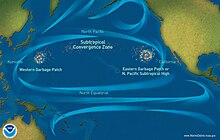
Large Pacific garbage patch
Measures to prevent environmental pollution:
Use of Renewable Energy Sources: The combustion of fossil fuels leads to air
pollution and greenhouse gas emissions. The use of renewable energy sources, such
as solar, wind, and hydroelectric power, is an important step in reducing
environmental pollution.

International scientific journal
“Interpretation and researches”
Volume 1 issue 11 (57) | ISSN: 2181-4163 | Impact Factor: 8.2
151
Recycling and Waste Management: Waste recycling and composting organic
waste is one of the effective ways to reduce environmental pollution. The processing
of materials such as plastic, glass, and metal contributes to the conservation of natural
resources.
Protecting and Reproducing Green Areas: Trees and plants improve air quality
by absorbing carbon dioxide. Protecting parks and forests and creating new green
spaces is essential for environmental health. Use of environmentally friendly
products: In everyday life, using environmentally friendly alternatives instead of
chemically-containing cleaning agents, pesticides, and detergents reduces water and
soil pollution.
Public Transport and Transport Alternatives: Reducing the use of private cars,
using public transport and choosing environmentally friendly modes of transport,
such as bicycles, are effective in reducing air pollution.
Education and awareness-building: Raising environmental awareness and
educating people to protect the environment plays an important role in reducing
pollution in the long run.
Summary:
Environmental pollution is a problem that requires urgent action on a global
scale. Air, water, soil, and noise pollution have a direct impact not only on nature but
also on human health. Therefore, it is our responsibility to protect the environment
and leave a clean world for future generations through measures taken at the personal
and social levels. The use of renewable energy sources, waste management, the
protection of green spaces, and the selection of environmentally friendly products are
important
steps
in
the
fight
against
environmental
pollution.
References:
1 “Atrof-muhit kimyosi” S.M.Turobjonov , T.T.Tursunov, K.M.Adilova
Toshkent – 2022
2.“Ekologiya va atrof-muhitni muhofaza qilish asoslari” P.S.Sultonov «Musiqa
» nashriyoti Toshkent -2007
3.Impact and control of anthropogenic pollution on the ecosystem – A review
Ngozi H. Arihilam and E. C. Arihilam
4.https://trendexmexico.com/novosti-i-obschestvo/76252-antropogennye-
faktory-primery-chto-takoe-antropogennyy-faktor.html